Basic system
Interconnected detection throughout the house, properly sited and sounding together rather than one unit at a time.

Services Residential fire alarms
Protecting lives and property. Rest comfortably knowing your family and pets have life-saving protection from a company you can trust.
Our residential consultants are experienced, and will collaborate with you to understand the needs of your property and develop the solution that suits it.
We offer many options, from basic systems through to smart home systems that let you tailor notifications from your phone — so you know about a problem whether you are upstairs, at work or away for the week.
Smoke
Detection sited properly for the layout, not just near the stairs
Heat
For garages, attics and kitchens where smoke units nuisance-trip
Carbon monoxide
CO detection to the same standard and on the same system
Alerts
Monitoring, and notifications tailored on your phone
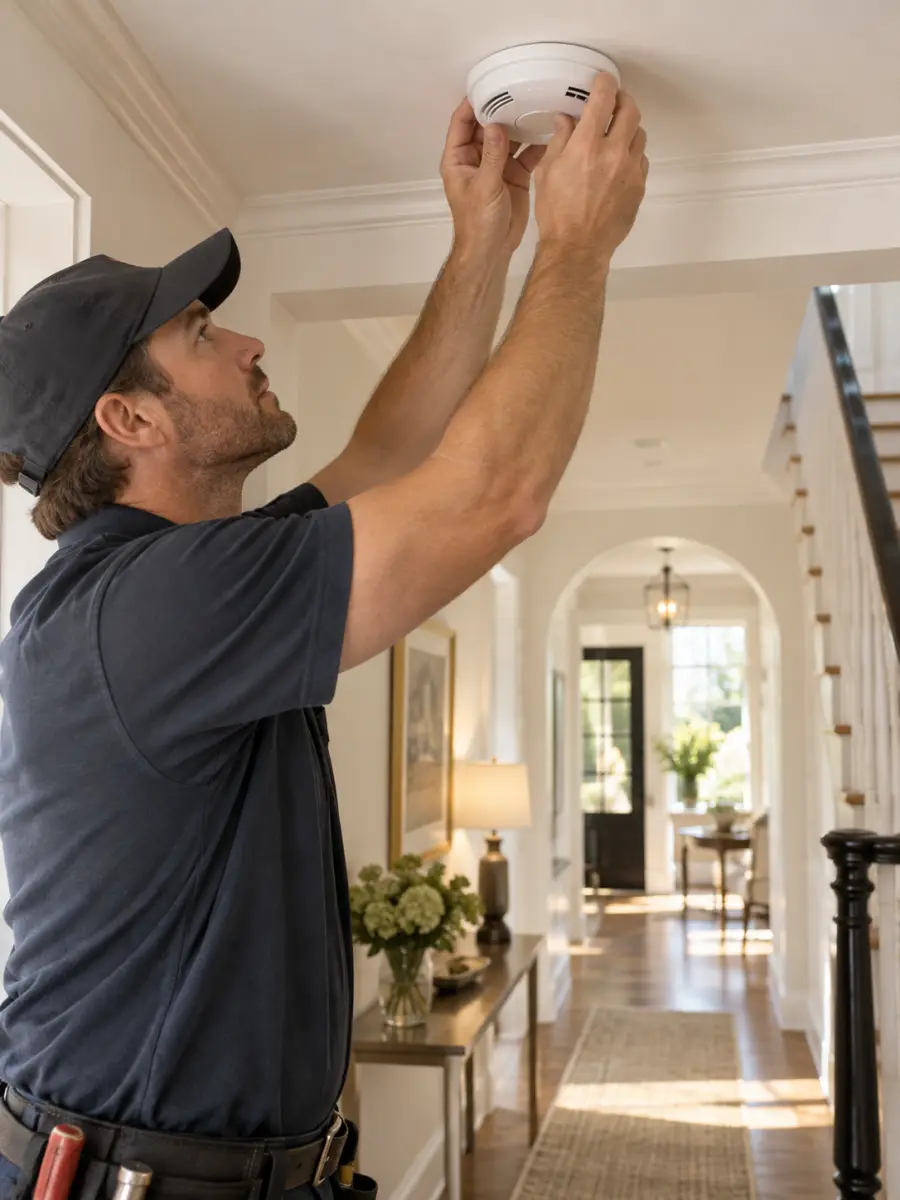
Life safety first
We consider your life safety needs our top priority, and we keep current on the codes that govern them.
The failure mode worth designing against is not the alarm that never sounds. It is the one that sounded so often over burnt toast that somebody took the battery out in March.
That is why the detector type and its placement get thought about — heat rather than smoke where the cooking happens, and units sited for the way the house is laid out.
We design, install, inspect and monitor the systems we service, and meet your requirements including your budget, while complying with insurance, regulations and municipal codes.
Options
The right answer depends on the house and on how much you want to think about it.
Interconnected detection throughout the house, properly sited and sounding together rather than one unit at a time.
Central station monitoring around the clock, so help is called whether or not anybody is home to call it.
Notifications tailored on your phone — which device, which room, and what it is telling you.
Tied into your security alarm and automation, so one system covers the house.
Typical installs
Brookhaven, Yaphank and Moriches outward, and across the rest of Long Island.
Single family
The common case, done properly rather than minimally
Estates
Large layouts where one sounder is never enough
New builds
Wired in during construction, before the walls close
Renovations
Brought up to current code as part of the works
Older homes
Systems fitted decades ago and never revisited
Second homes
Monitored, because nobody is there to hear it
How the job runs
The same crew handles every stage, so nothing gets lost between trades.
A consultant walks the house, works out detector types and placement for the layout, and what the code and your insurer require.
Fitted by our own technicians, cleanly, with as little mess and disruption to the house as the job allows.
Tested and certified, then re-inspected on a schedule so it stays as reliable as the day it went in.
Central station monitoring around the clock, with notifications set up the way you want them on your phone.
Free on-site surveys and estimates for new customers. Tell us about the house and we will come and look at what it needs.
Call (631) 801-0255Common questions
They are better than nothing, and for some homes they satisfy code. What they do not do is interconnect reliably, cover carbon monoxide to the same standard, or tell anybody when the house is empty. A monitored system does all three.
Almost always the wrong detector type in the wrong place. Heat detectors belong in kitchens, garages and attics; smoke units belong elsewhere. It is a fixable problem, and worth fixing, because nuisance trips are what get systems disabled.
In most homes, yes, and the requirements have changed over the years. It is a common thing to find missing or long expired on a system that was fitted a decade or more ago.
With monitoring, the central station is alerted and help is dispatched without anyone having to make the call. You also get the notification on your phone, so you are not finding out from a neighbor.
Yes — fire, carbon monoxide and security on one system and one keypad, with one monitoring account rather than two.
Not always. We inspect it, tell you honestly what is still sound and what has aged out, and price bringing it up to current code. Detectors have a service life even when they appear to be working.
More from High Tech
If the job spans several systems, you still deal with one contractor from first visit to final inspection.
01
Professional grade access control systems and access control installation services.
02
Control your home or business at the touch of a button. Dim the lights, turn on the stereo, adjust the temperature.
03
Your trusted source for structured voice and data cabling, done to spec.
04
Licensed CCTV installer with many years of experience. Quality installations built to last.
05
Code-compliant commercial fire alarm design, installation, inspection and monitoring.
06
Schedule a consultation with our integrated security professionals to evaluate your property.
07
Contemporary or traditional, we work with you to create the room you had in mind.
08
Multi-room music systems, whether you are building new or retrofitting.
09
Window coverings that stand alone or integrate with a larger automation system.
10
Business phone systems from most major manufacturers, specified to how you actually work.
11
Easy-to-use high definition conference room solutions for any size space.
Free consultation and quote, no obligation. Tell us what you need protected and we will tell you exactly what it takes.